


Asbestos in Renovation: How a Small Report Can Save Big Money.
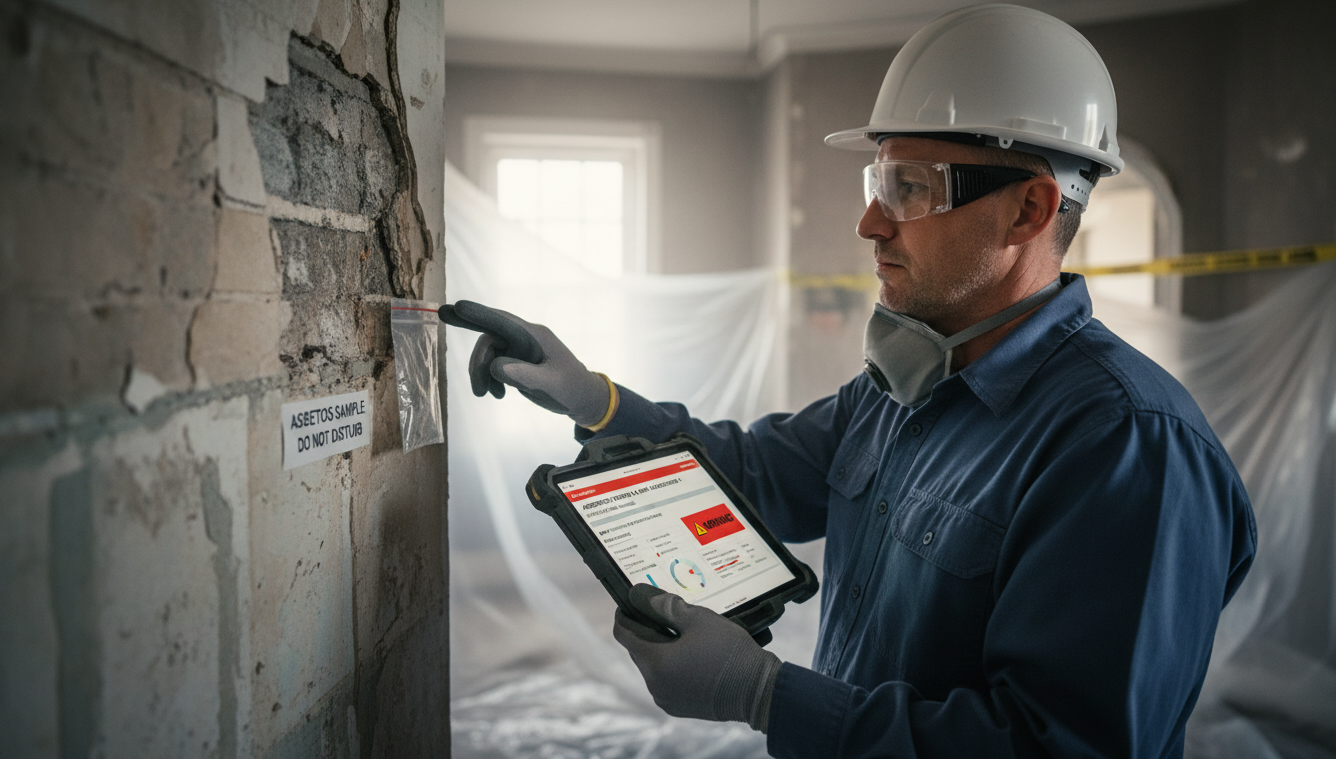
Asbestos in Renovation: How a Small Report Can Save Big Money.
Renovating ancient buildings requires a complete paradigm shift, where anticipating unseen risks is paramount. Among the most critical hidden dangers is asbestos (amiante), a pervasive element in older structures that, if undetected, can jeopardize a project’s timeline and financial viability.
For investors and project managers, mitigating this risk begins not with construction, but with rigorous, specialized documentation.
The Essential Diagnostic: Beyond the Sales Report
In renovation, nothing starts from zero; the project confronts a legacy full of materials that may include leaded coatings or asbestos. Identifying these materials is crucial because they turn the renovation site into a high-risk environment.
The most vital document for project initiation is the Diagnostic Amiante Avant Travaux (DAAT), or Asbestos Diagnosis Before Work.
It is essential to understand that this DAAT is not the same as the standard asbestos report provided during a property sale. The DAAT is specifically mandatory for any work involving removal, drilling, or demolition, even partial (déposes, perçages ou démolitions, même partiels). Relying solely on the original sales report is a serious mistake, as commencing the stripping phase (curage) without the DAAT results exposes workers to dangerous, invisible, and deadly fibers.
The High Cost of the Unforeseen.
The primary thesis in project management for old buildings is that the unforeseen (l’aléa) is the norm, not the exception. Undetected asbestos hidden in elements like floor tiles or conduits is a financial trap that must be anticipated in the initial quoting phase.
The sources quantify the dramatic consequences when this trap is sprung:
- Budget Doubling: If undetected asbestos is discovered, the demolition budget doubles (Le budget démolition double).
- Scheduling Delays: The planning takes 4 weeks of delay (Le planning prend 4 semaines de retard).
- Escalated Costs: Costs related to specific stripping (curage spécifique lié à la présence d’amiante) are typically not covered by a standard company quote.
Consequently, failing to invest in the upfront DAAT report means the project is exposed to a financial shock, potentially making the final cost superior to that of a new construction.
Rigorous Methodology for Confirmed Presence.
If the DAAT confirms the presence of asbestos, the professional must adopt strict, regulated protocols:
- Controlled Intervention: The building structure is opened through a highly sensitive act of preparation (curage). This must be managed with coordination from a certified company.
- Removal vs. Conservation: The project team must choose between complete removal (retrait complet)—which requires a removal plan validated by the labor inspection—or controlled conservation (conservation maîtrisée), adapting the project accordingly.
- Waste Management: Asbestos and lead waste must be handled through a Special Channel (Filière Spécial) and require mandatory monitoring and a defined removal plan (plan de retrait).
This rigorous documentation and adherence to protocol are essential because they define the scope of responsibility, ensuring that the work remains justifiable technically and financially.